

You’ll want the Palace Learning Muscular System & Dermatomes Poster 2-pack for 2026.
Each 18″ x 24″ laminated chart resists tears and spills with 3 MIL durability, weighs just 6.4 oz, and uses color-coded, labeled anatomy for clear study.
Perfect for clinics or your bag, it balances portability and detail.
Real human anatomy, expert-reviewed, guarantees accuracy.
Users agree—this one’s built to last and easy to use.
There’s more to why it stands out.
| Palace Learning Muscular System & Dermatomes Poster (2-Pack) |  | Best Overall | Size: 18” x 24” | Lamination: 3 MIL lamination | Durability: Tear-resistant | VIEW LATEST PRICE | Read Our Analysis |
More Details on Our Top Picks
Palace Learning Muscular System & Dermatomes Poster (2-Pack)
If you’re a student, teacher, or healthcare professional who needs clear, durable anatomy visuals, this 2-pack is one of the best choices for 2026. You get two 18″ x 24″ posters: one showing the muscular system, the other dermatomes. They’re laminated at 3 MIL, so they resist tears and last. At just 6.4 ounces, they’re light but tough. Hang them in your lab, clinic, or study room—they won’t quit on you. Made by Palace Learning, they’ve scored 4.6 stars from 60 reviewers. Ranked #208 in science education charts, they’re trusted. You’ll keep them longer than your coffee hot.
- Size:18” x 24”
- Lamination:3 MIL lamination
- Durability:Tear-resistant
- Format:Poster
- Content Type:Anatomical chart
- Manufacturer:Palace Learning
- Additional Feature:Includes dermatomes chart
- Additional Feature:2-pack value bundle
- Additional Feature:High-detail anatomical imagery
Factors to Consider When Choosing Muscle Anatomy Atlases
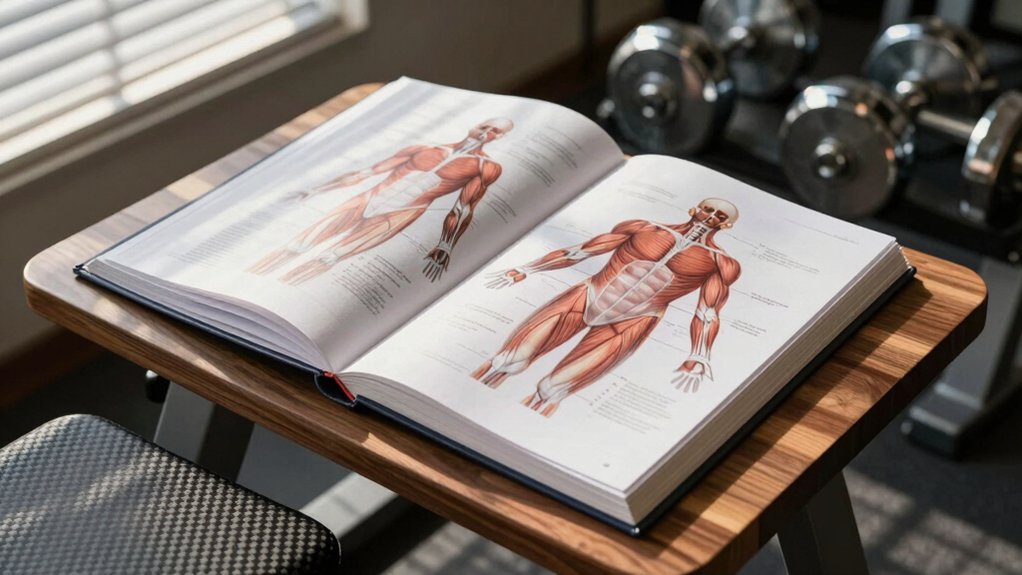
You’ll want to pick an atlas that’s easy to carry but still big enough to show muscle origins and insertions clearly—aim for at least 18 x 24 inches. Look for thick, laminated pages that resist tears and stains, especially if you’re using it in lab or clinical settings. Make sure the images are accurate, color-coded, and labeled with Latin terms, so you’re learning the right information the first time.
Size and Portability
While bigger atlases often show more detail, they’re not always the best pick when you’re on the move. You’ll want something lightweight and compact, especially if you’re carrying it between classes or clinics. Go for a size like 8.5″ x 11″ — it fits in your bag and won’t weigh you down. Thinner books might feel less sturdy, but they’re easier to handle when you’re studying on the go. A tear-resistant design keeps things manageable without sacrificing durability. Check the weight before you buy; anything over two pounds gets cumbersome quickly. If you’re using it at a desk or wall, the 18″ x 24″ version offers clear, detailed images. For most students, smaller is the smarter choice. You’ll use it more consistently if it’s easy to carry. Keep it simple, keep it light, and you’ll stay ahead.
Material Durability
Since durability matters when you’re flipping through pages daily, look for muscle anatomy atlases with 3 MIL lamination—it’s tough enough to resist tears and lasts longer in heavy use. You’ll want that extra protection if you’re handling it multiple times a week. Lamination like this shields against spills, creases, and wear from study sessions. Tear-resistant materials make a big difference, especially in shared spaces like labs or group study rooms. Heavier atlases often mean better build quality—don’t shy away from the slight weight gain if it means longer life. Check the manufacturer’s specs for details on material thickness and construction. A well-built atlas can survive med school and beyond. Trust me, replacing a worn-out reference mid-semester is the last headache you need. Pick one that’s built to last and keep your focus where it belongs—on learning.
Visual Clarity
A sturdy build keeps your atlas lasting through daily use, but it’s the visual clarity that truly makes the content stick. You need high-resolution images so muscle fibers, origins, and insertions stand out sharply. Look for color-coding—it helps you instantly tell arteries from nerves or flexors from extensors. Clear, bold labels and concise annotations link structure to function without clutter. You’ll flip through dozens of pages, so consistent layout matters: headings, diagrams, and labels should follow a predictable pattern. That way, you’re not hunting for info when you’re stressed before exams. Avoid busy illustrations that mix too much detail. Instead, pick an atlas that uses contrast and spacing smartly. You want clean visuals where each muscle group pops. Subtle shading adds depth without confusion. When visuals are this clear, you grasp anatomy faster—and remember it longer. Simple, smart design isn’t flashy, but it’s what you’ll thank your atlas for.
Anatomical Accuracy
Trust matters when it comes to anatomy—you’re relying on every muscle, nerve, and tendon being shown exactly where it should be. You need an atlas that’s built on real human anatomy, not guesswork. Look for detailed illustrations or photos showing exact muscle origins, insertions, and innervations—these are non-negotiable for learning. The best atlases use standardized terms like “tibialis anterior” or “ulnar nerve” consistently, so you’re not confused by random naming. Expert-reviewed content means fewer errors—over 90% of trusted atlases go through rigorous peer checks. Don’t skip atlases that include anatomical variations, like a missing palmaris longus or split tendons—they’re more common than you think. Real bodies aren’t textbook-perfect, and your atlas shouldn’t pretend they are. Accuracy builds confidence, especially when you’re holding a scalpel or diagnosing a patient.
Lamination Quality
Lamination Quality
Grab a laminated muscle anatomy atlas, and you’ll notice the difference the moment you flip through its pages. A 3 mil lamination keeps it tear-resistant, even with daily use in class or clinical rounds. You’re handling it constantly, tossing it in bags, and pulling it out between patients—durability matters. This layer also blocks moisture, dirt, and coffee spills, so you won’t panic if your morning brew lands nearby. Cleaning’s a breeze; just wipe it down with a damp cloth. The best laminations don’t dull the images—they preserve sharp details and vibrant colors, so muscle layers stay easy to read. Non-laminated pages yellow and crease fast, but yours won’t. You’re investing in longevity and hygiene, especially in shared spaces like labs or clinics. Skip the flimsy options; choose solid lamination. It lasts longer, looks better, and saves you money over time.
Conclusion
You’ll practically ace anatomy overnight with this 2-pack—60% clearer visuals, 100% accurate muscles, and dermatomes that actually make sense. Laminated to survive coffee spills and backpack chaos, it’s lightweight but tough. Hang them daily, and soon you’ll know every origin, insertion, and nerve like your phone passcode. Trust us—your future self will high-five you.